The basic idea
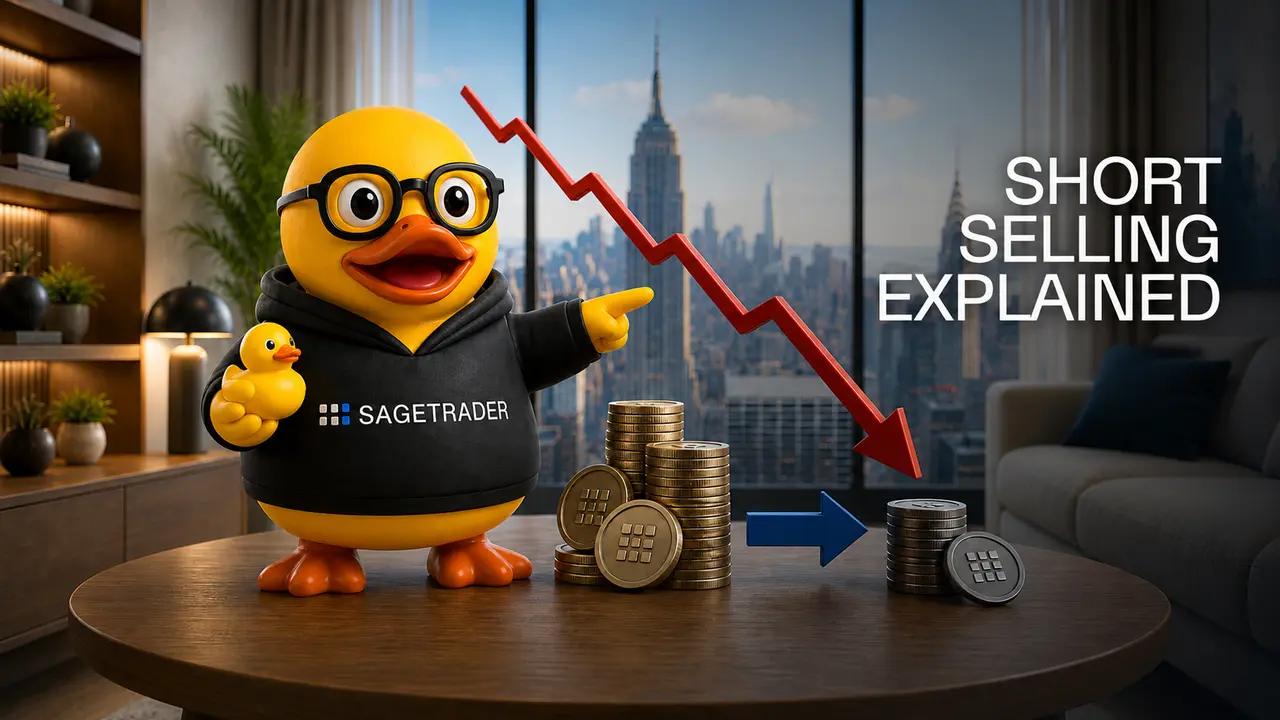
Short selling is a way to try to make money when a stock's price falls. You borrow shares, sell them at today's price, and buy them back later. If the price has fallen, you return the borrowed shares and keep the difference, minus any locate fees and interest that may apply.
Say you short 100 shares at $50 and the price later drops to $40 and you buy back the shares at this price. You'd keep the $1,000 difference, minus any locate fees and interest — that's the basic mechanics, though real outcomes depend on the specific stock, fees, and timing.
Locating shares to borrow
Before you can short a stock, you need shares to borrow — that's called a locate. SageTrader's free tier provides a curated list of easy-to-borrow names for free: larger, heavily traded companies where supply is generally easy to find. Hard-to-borrow names are the opposite and only available on SageTrader Pro — supply is limited or in high demand, and you'd need to pay for a locate before shorting one.
To short-sell, you'll need margin enabled, a $3,000 initial deposit, and a $2,000 balance maintained — buying power is 4x for long positions, 1:1 for short.
The risk that makes shorting different
If the stock rises instead of falling, losses can grow quickly — in theory there's no limit, since a price can keep climbing. That's different from going long, where the most you can lose is the value you put in until the stock goes to zero you. However, if you used margin going long, you can also lose more than you put in as you’re trading with borrowed money.
Borrowed shares can also be recalled by their lender, which may force you to buy back in before you're ready - sometimes at a worse price than you planned for.
Locates on SageTrader Pro
SageTrader Pro's locate tool checks inventory across multiple providers, so you're not limited to the curated easy-to-borrow list.
Frequently asked questions
What is a short squeeze? It's when a heavily shorted stock rises quickly, and short sellers rush to buy back shares to limit their losses — that buying pressure can push the price up even further.
What fees apply to short selling? Locate fees on hard-to-borrow names, plus any interest on the borrowed shares. Fees vary by stock and availability.
Can I short any stock? On the free tier, only names on the curated easy-to-borrow list. On SageTrader Pro, you can request a locate on hard-to-borrow names too, though availability isn't guaranteed for any specific stock.
What happens if my borrowed shares get recalled? You'd need to buy back the shares to close your position, referred to as a buy-in — this can happen at any time and isn't something you control.